When Waiting Is Fine
Not every noise is an emergency. If your door was put in anywhere from 1973 to the early 2000s - the range that covers most of this area, with the median build landing around 1979 - a slow track, a squeaky roller, or a hinge that's starting to groan is wear, not failure. Those parts have decades of cycles on them and a little stiffness is normal before it's a problem.
What can wait: a door that's slightly louder than it used to be, an opener light that's burned out, weatherstripping that's gone a bit brittle but still seals. None of that strands your car in the garage.
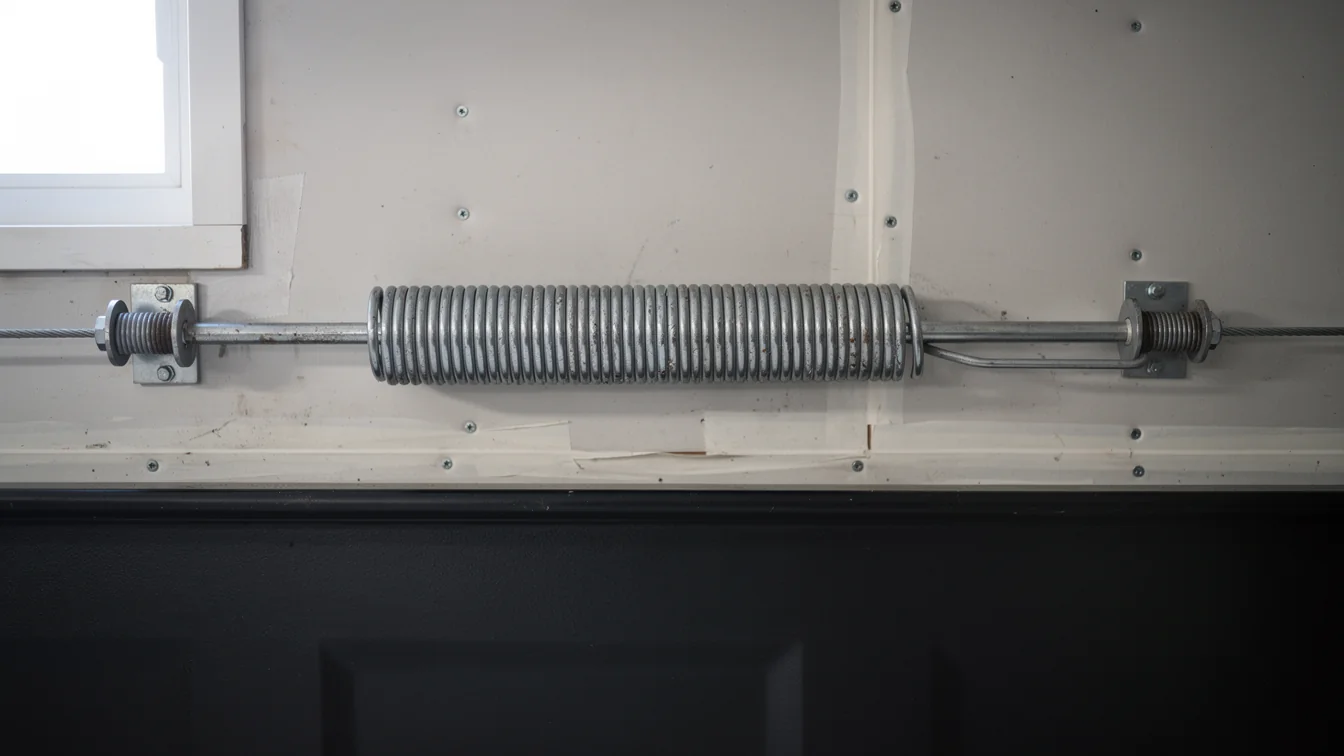
What shouldn't wait: a door that's noticeably off-level, a spring that looks stretched or has a visible gap in its coil, or a door that drops instead of lowering smooth. On a 1970s-era torsion setup especially, a spring that's starting to go rarely announces itself twice - it goes from "a little rough" to "came off the drum" without much warning in between. If your house falls in that older end of the build range, that's the part worth checking before you ignore the sound another month.
What the Weather Here Does to It
This area sits in a mild band with only occasional freeze, which is both good news and a trap. Good, because your hardware isn't cycling through hard freeze-thaw swings every winter the way steel does further north - lubricant doesn't gum up from cold the same way, and metal isn't contracting and expanding on a tight seasonal schedule.
The trap is that because real cold is rare here, doors and springs aren't built or maintained with it in mind, so on the handful of nights a year it does snap below freezing, a spring or cable that's already fatigued is more likely to be the one that lets go. We're not dealing with a door engineered for daily freeze cycles getting a break - we're dealing with a door that almost never sees cold getting caught off guard by it.
That's the honest shape of the weather risk here: not constant stress, just an occasional spike that finds the weakest link. It's one more reason a spring with visible wear is worth swapping before, not after, one of those cold stretches.
What Is Going On
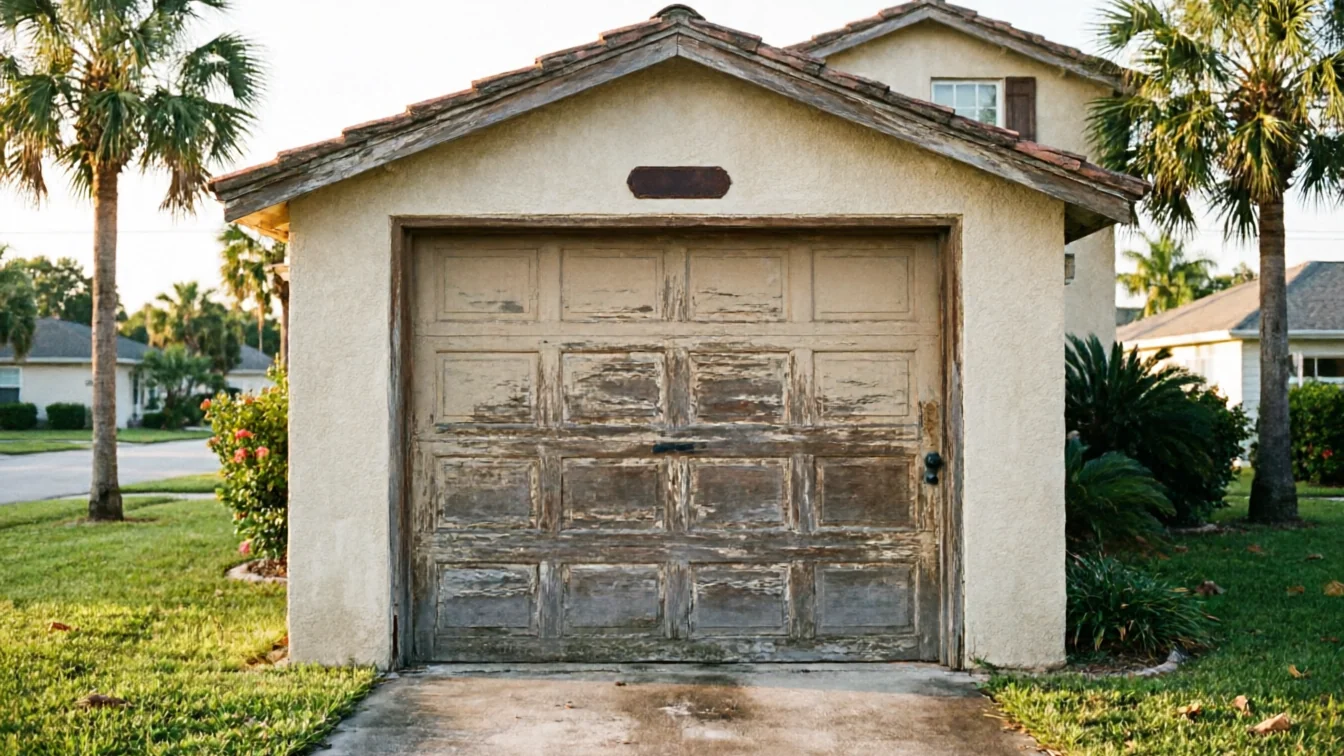
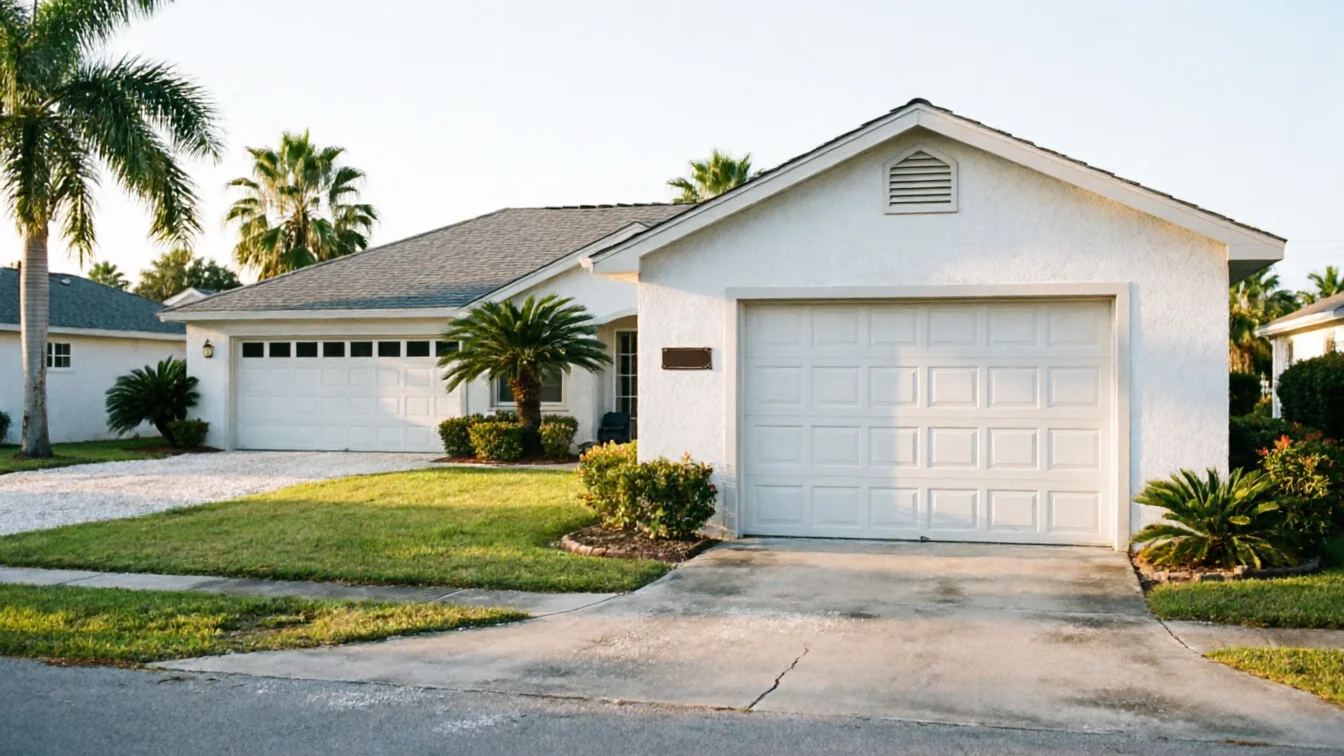
Housing across the service area runs from 1973 up through 2013, with the median build around 1979, which means on any given call we're just as likely to be looking at original hardware from the Carter administration as we are a door and opener installed sometime in the last decade. That split matters because the failure points are different.
On the older end - closer to that 1979 median - we're usually looking at galvanized torsion springs nearing or past their rated cycle count, steel rollers instead of nylon, and openers with chain drives that are louder and harder on the door than what's sold today. On the newer end of the range, issues tend to be electronic: a sensor out of alignment, a circuit board that's taken a surge, or a belt-drive opener that's just due for a tune.
With 8,743 owner-occupied houses across roughly 14,374 households in the service area, that age spread is wide enough that we don't assume anything about a door before we look at it. A call near Lake Lorraine or Valparaiso might turn up a 1970s torsion system; one closer to Shalimar or Miramar Beach might be a ten-year-old belt drive with a bad sensor. Same service call, different job entirely.
When It Stops Being a DIY Job
A torsion spring under load can put someone in the hospital if it's unwound wrong - that's not us being cautious, that's just what a wound steel spring does when it releases uncontrolled. If the job involves touching the spring, the cable drum, or anything holding tension, that's where we draw the line on what a homeowner should attempt.
What's genuinely fine to do yourself: tightening loose hardware, cleaning and lubricating tracks and rollers, replacing weatherstripping, swapping a remote battery. What isn't: spring replacement, cable work, or anything where the door is being held up by something other than the track itself.
One honest limitation on our end - if a door is original to a house near that 1979 median and the opener, springs, and tracks are all original too, sometimes the math doesn't favor repair. Parts for some of that older hardware are harder to source than they used to be, and at a certain point a full replacement costs about the same as chasing three separate repairs on a system that's going to need the fourth one anyway. We'll tell you straight when that's where you're at instead of billing you for the first three.
Talk to a local pro
Garage door trouble in Destin?
Same-day service with honest, upfront quotes.