
Early cable fraying
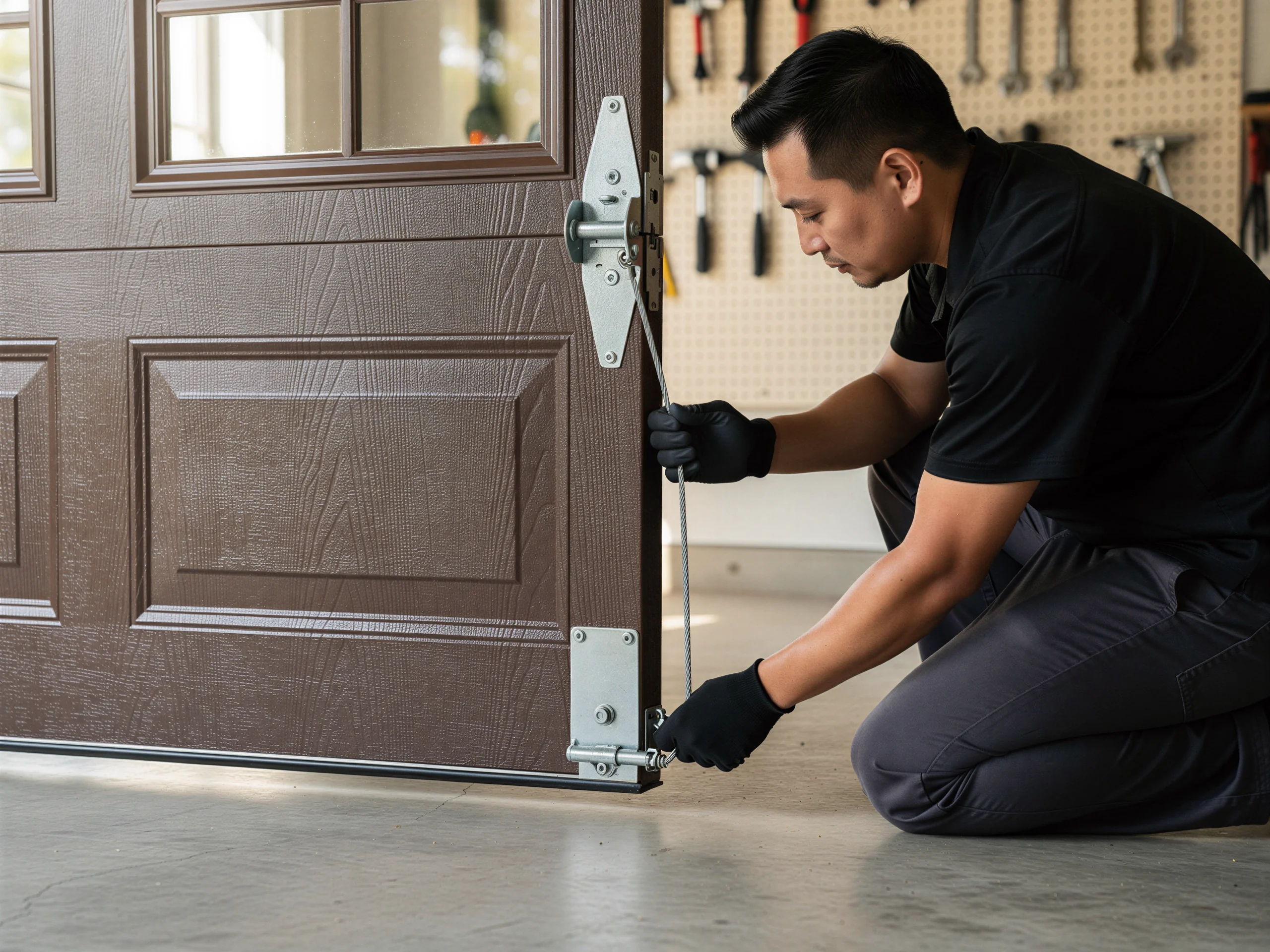
A single frayed cable caught before it breaks is a different job than a door that's been sitting cocked on one side for a week. What we can tell you: this is not a job to put off.
Destin, FL
Broken or frayed garage door cables are common in Destin's 1970s-80s housing stock and salt air. Here's what drives the failure and what a repair involves.
Pricing
We're not going to put a number here that doesn't hold up once a tech is standing in your driveway. Cable repair pricing depends on whether one cable snapped or both, whether the drum or pulley got chewed up when the cable let go, and whether the door dropped crooked and bent a track on the way down.
A single frayed cable caught before it breaks is a different job than a door that's been sitting cocked on one side for a week. What we can tell you: this is not a job to put off.
A cable under tension that's already fraying is going to go, and when it goes, the door usually doesn't just stop - it drops, and it drops unevenly, which is how a $20 part turns into a bent track and a dented panel. If you've got a door that's slow on one side, a cable that looks rusted or kinked, or a door that looks slightly off-level in the opening, that's worth a call before it becomes a bigger tab.
One honest limitation: if the cable failure already took out the bottom bracket or cracked a stile on the bottom panel, cable repair alone won't fix it - at that point you're into panel or hardware replacement, and we'll tell you that straight instead of patching something that'll fail again in a month.
Local causes
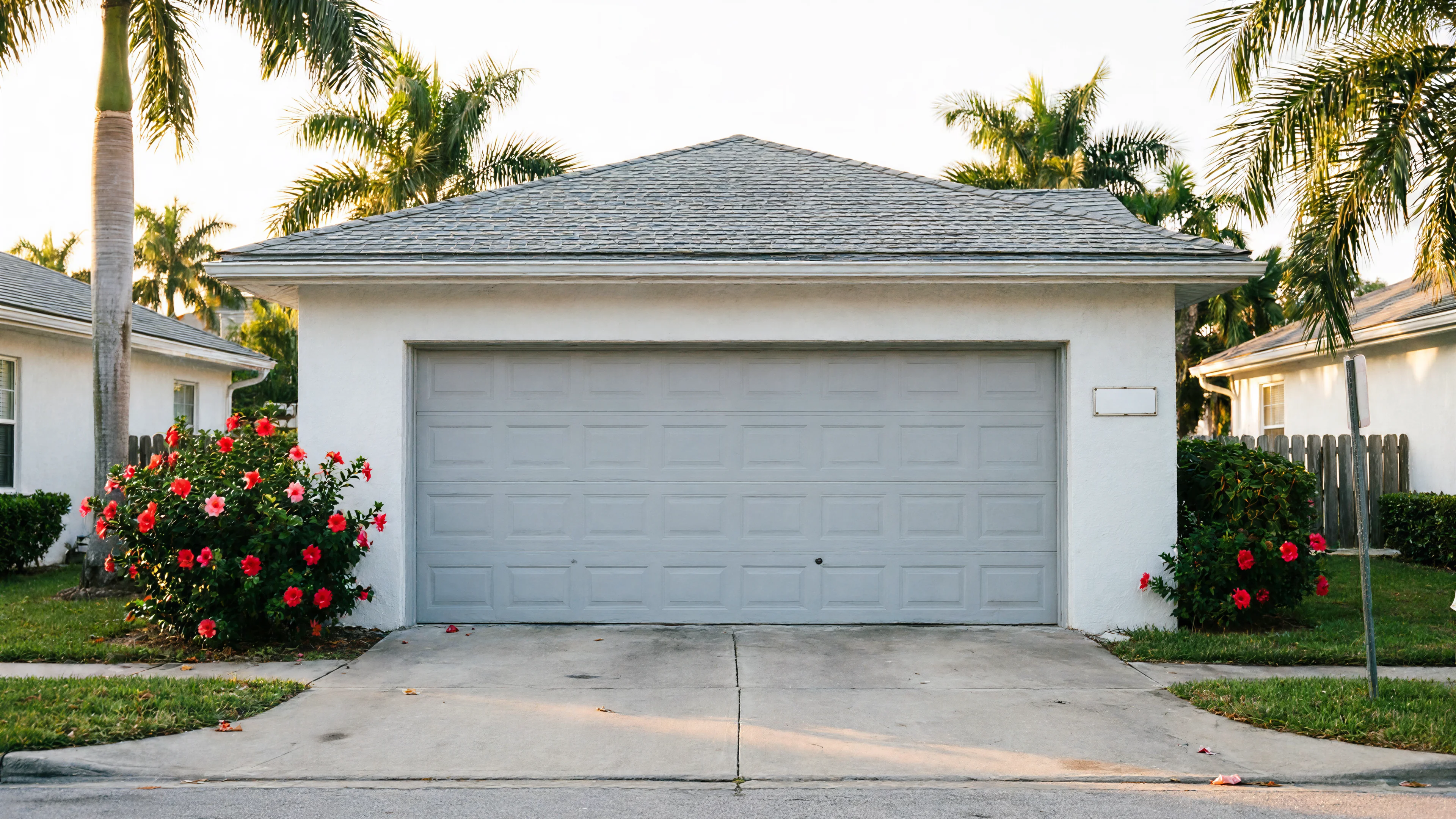
Most of the houses we work on across this stretch of the coast went up between 1973 and 2013, with a lot of that stock clustered in the late 70s and early 80s - that's the median build year across the seven areas we cover. Doors and openers from that era weren't built with coated, corrosion-resistant cable as a default, and plenty of originals or early replacements are still running galvanized cable that's had thirty-plus years to work-harden and fatigue at the drum.
The climate band here is mild with occasional freeze risk, not harsh winters, so cables don't usually snap from cold-weather brittleness the way they might further north. What gets them here is humidity and salt-laden air cycling through metal day after day - it doesn't take a hard freeze to fatigue a cable, just years of damp air finding every nick in the coating. Add in a garage that sits closed and un-ventilated most of the year, trapping moisture against the hardware, and you've got a slow corrosion process that a visual check from the ground rarely catches until a strand starts to fray visibly at the drum or bottom bracket.
DIY or pro
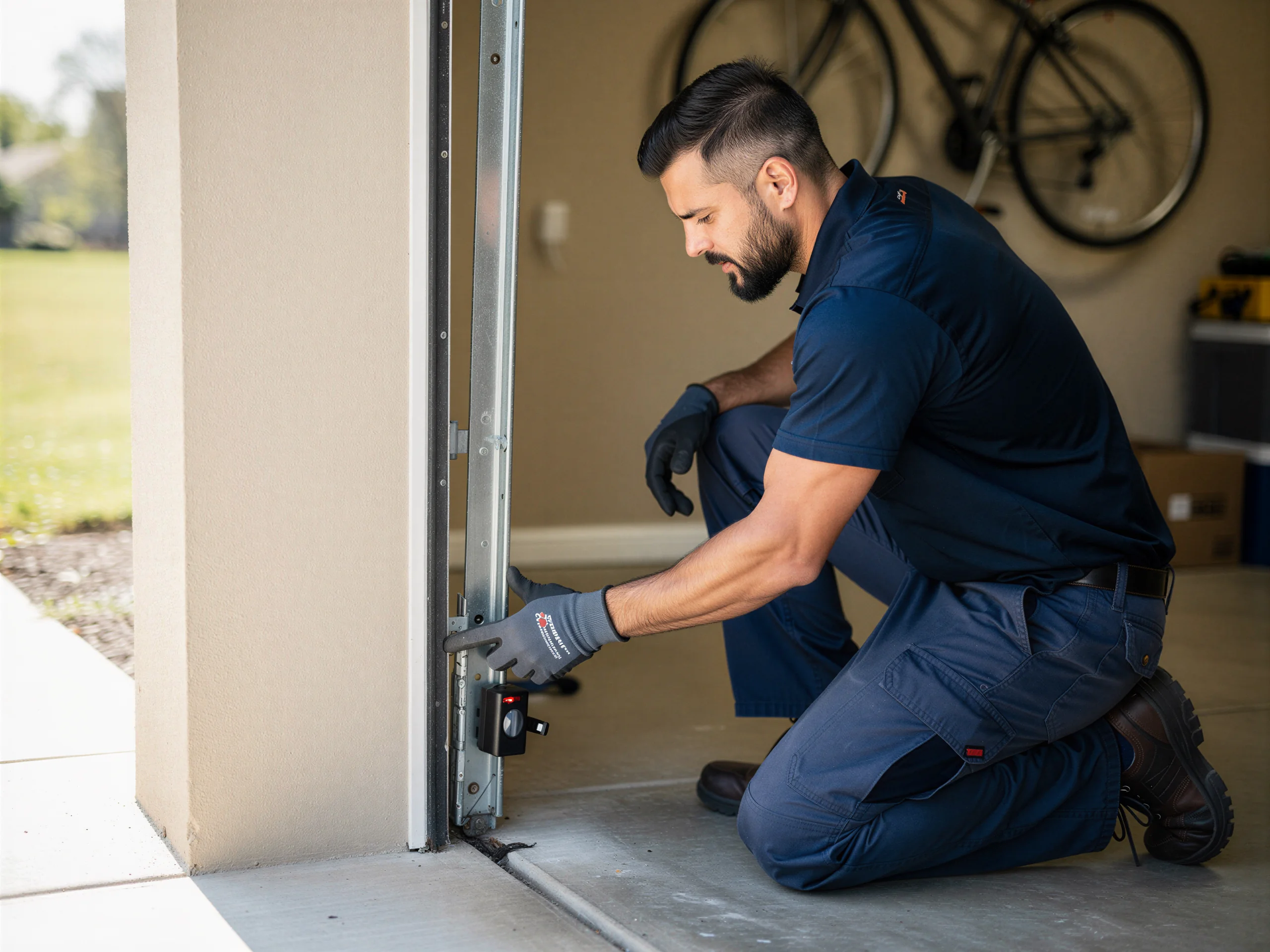
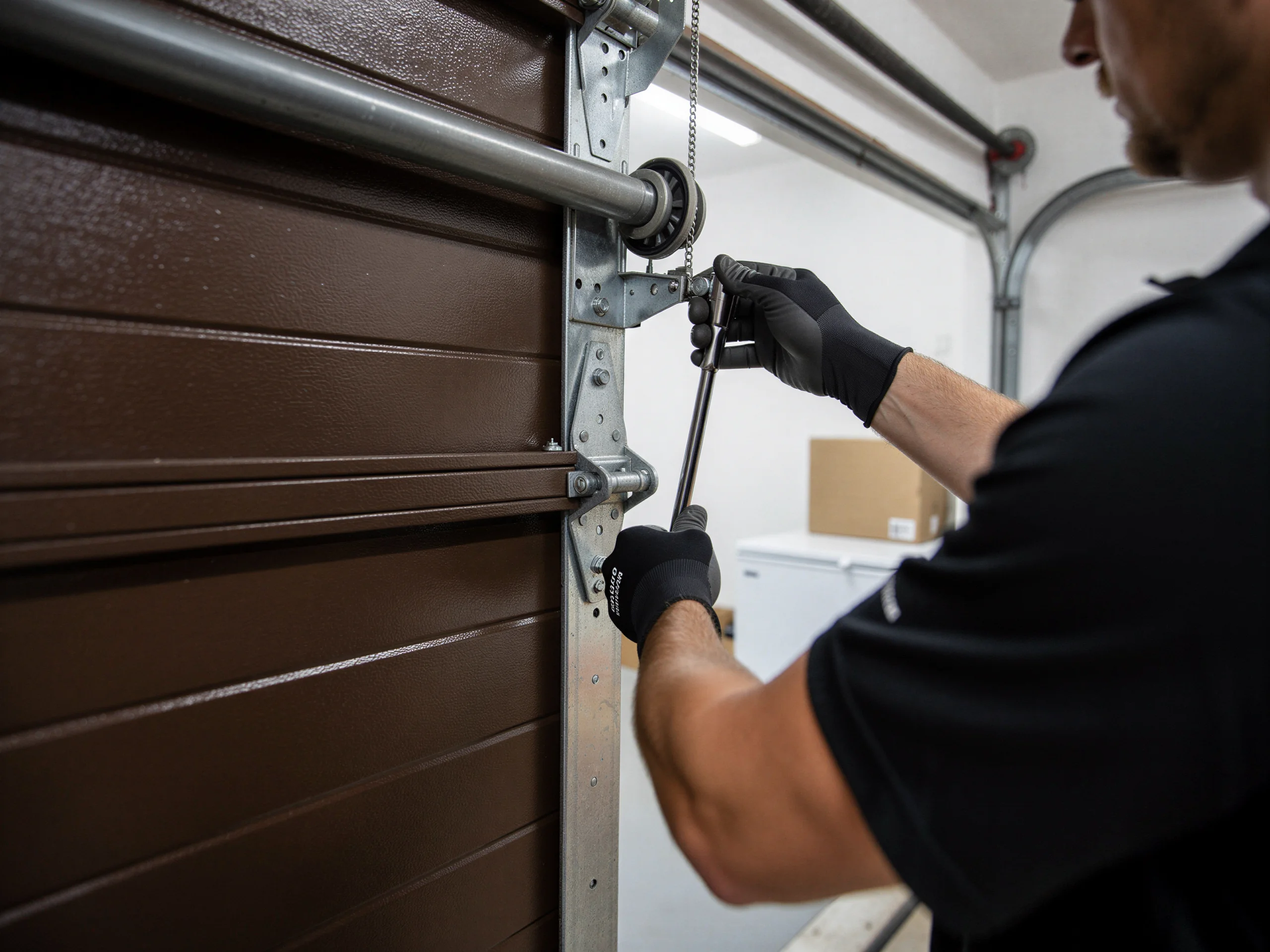
A garage door cable is under serious spring tension even when the door looks like it's just sitting there. If you take a drum, a bottom bracket, or a cable off a torsion or extension spring system without knowing exactly how to release that tension first, you're working next to a part that can whip hard enough to break a hand or worse.
This is one of the few jobs in this trade where we'll say flatly: don't. What you can safely do is look. With the door closed, walk the tracks and check both cables from the drum at the top down to the bottom bracket.
Look for rust bloom, flattened or kinked sections, or individual strands sticking out from the main cable - any of those means replacement, not a wait-and-see. Check that the cable sits cleanly in the drum groove and isn't crossed over itself. Listen for a popping or grinding sound when the door runs, which can mean a cable riding wrong on the drum before it fails outright.
If you see fraying, don't run the door again. Block it from opening, call it in, and let someone release the tension properly. Running a door on a cable that's already shedding strands is how a controlled repair becomes an emergency one.
Warning signs
The door looks tilted in the opening - one side higher than the other, or the bottom edge not sitting flat on the slab. That's usually one cable still holding while the other has slipped or snapped.
You'll often hear it before you see it: a loud bang or snap from the garage, sometimes followed by the door dropping a few inches on one corner. Sometimes it's quieter. The opener runs but the door moves jerkily, or it reverses partway up for no clear reason - the opener's sensing resistance from a cable that's binding on a damaged drum.
A door that used to run smooth and now drags on one side, or makes a grinding sound near the top of the tracks, is often a cable starting to go before it fully lets go.
Across the roughly 8,700 owner-occupied houses in the areas we cover, this shows up most in homes built in that late-70s to mid-80s window, where original hardware or an early replacement cable has simply aged out. If your door is acting uneven, stop using it and get it looked at - a cable that's partway gone doesn't get better on its own.
Questions
Destin's climate is mild with only occasional freeze risk, so it's not cold-weather brittleness doing the damage. It's humidity and salt air working on the cable's coating year-round, especially in garages that stay closed and poorly ventilated. Over enough years, that steady moisture exposure fatigues the metal the same way a hard freeze cycle would elsewhere.
No. The cable is anchored to a drum connected to a spring under heavy tension, and releasing that tension without the right process can cause serious injury. You can safely inspect the cable visually, but the replacement itself - including releasing and resetting spring tension - should go to someone who does it regularly.
Most of the time we replace both, even if only one has failed. They're usually the same age and have seen the same wear, so the second one is often close behind. Replacing just one often means a second service call within a year.
A lot of the housing across this area dates to the late 1970s through the 1980s, and that's where we see the most cable fatigue - original or early-replacement cables hitting the end of their working life. Newer construction from the 2000s and beyond tends to have better coated cable and fewer surprises, though age isn't the only factor.
Explore more
Ready when you are
Destin Garage Door Pros repairs and installs garage doors, springs and openers in Destin, FL and the surrounding area.