
Age drives repair cost
A broken torsion spring is a different job than a bent track, and a dead opener board is a different job than a cable that's jumped the drum. What drives cost in this area more than anything is age.
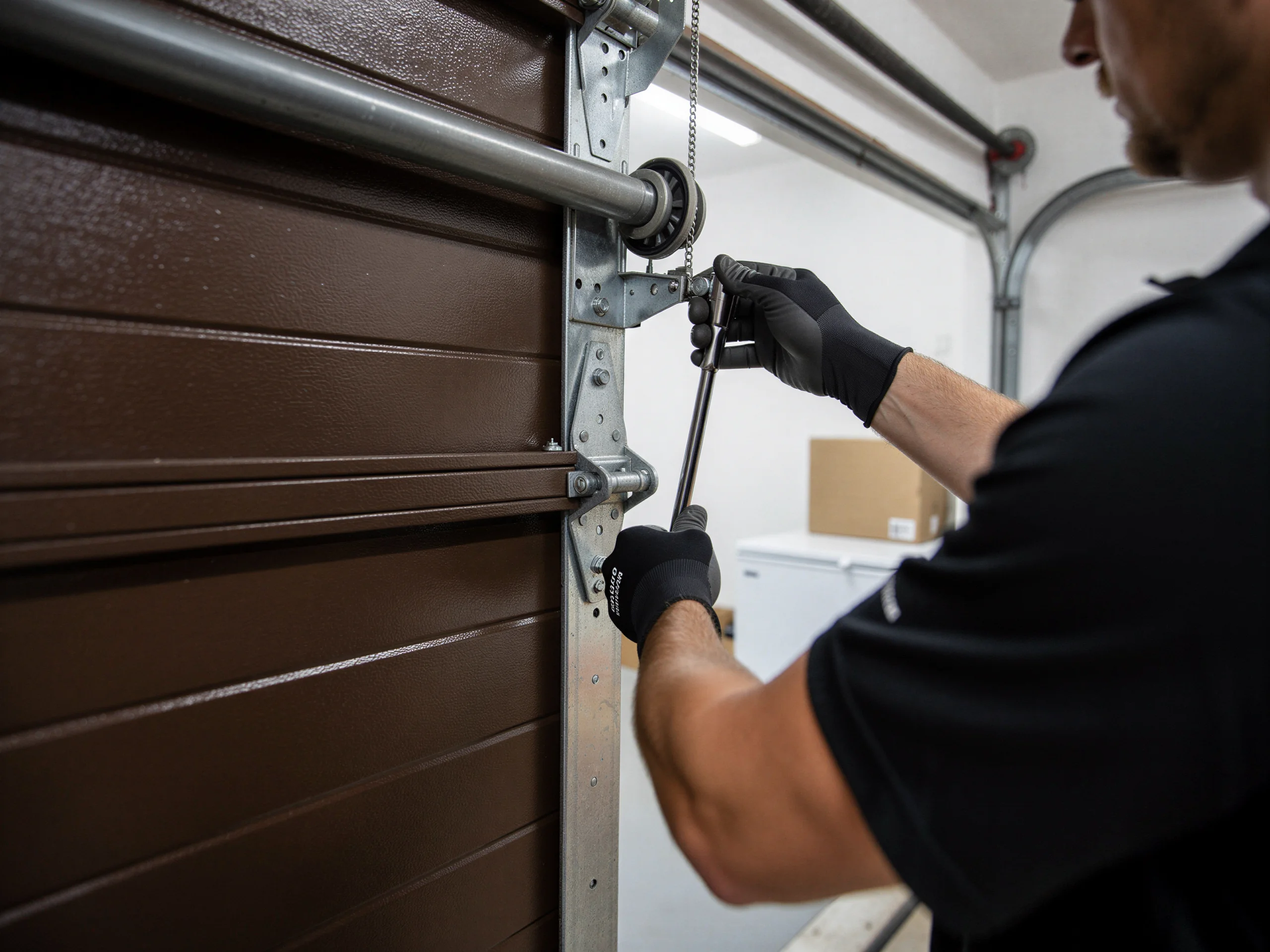
Destin, FL
Garage door repair for Destin homes built between 1973 and 2013. We know which parts wear out first in this area's housing stock and climate.
Pricing
We're not going to quote a number here that doesn't match what's actually wrong with your door, because the range is wide depending on what you've got.
A broken torsion spring is a different job than a bent track, and a dead opener board is a different job than a cable that's jumped the drum. What drives cost in this area more than anything is age.
A door that went up with a house built in 1979 or the early 80s is running on hardware that may not be made anymore, and sourcing a matching replacement panel or a specific torsion drum can add a day or two versus a part that's still in production.
Here's the honest limitation: if your door and opener are both original to a house from that era and something major has gone on both at once, we're often going to tell you replacement makes more sense than patching it twice in the same year. We'd rather say that up front than have you pay twice for parts that are on their way out anyway. For anything newer, repair is usually the right call and usually quick.
Local causes
The service area's housing stock runs from 1973 up through 2013, with a lot of it clustered around 1979, and seven of the named pockets in the area are still mostly 1960s and 70s construction. That matters because those decades used steel tracks, galvanized torsion springs, and chain-drive openers that were built to last maybe 10,000 cycles - roughly seven to ten years of daily use. A lot of those original parts are still out there, well past that number.
The climate here sits in the mild band with only occasional freeze, which is a break compared to places that deal with real freeze-thaw cycling - we don't see the cable snaps and the frozen-track jams that come from repeated hard freezes. What we do see is humidity working into unlubricated rollers and hinges over years of nobody touching them, plus springs that have simply cycled out their rated life sitting in a door that otherwise looks fine. Newer builds, the 2000s and 2010s stock, tend to have composite rollers and better-sealed openers that hold up longer, but the springs on those still have a finite life regardless of the door around them.
DIY or pro
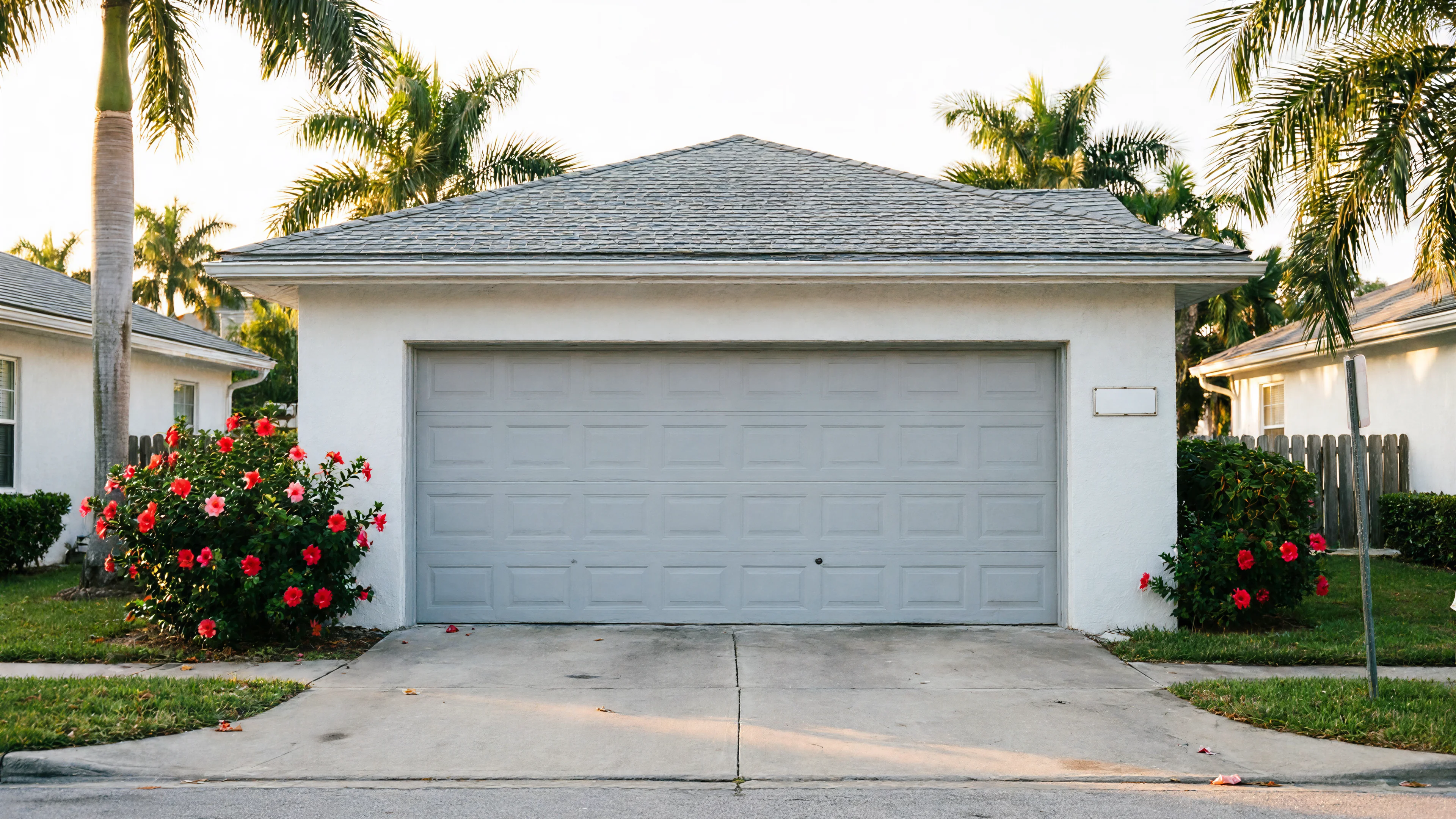
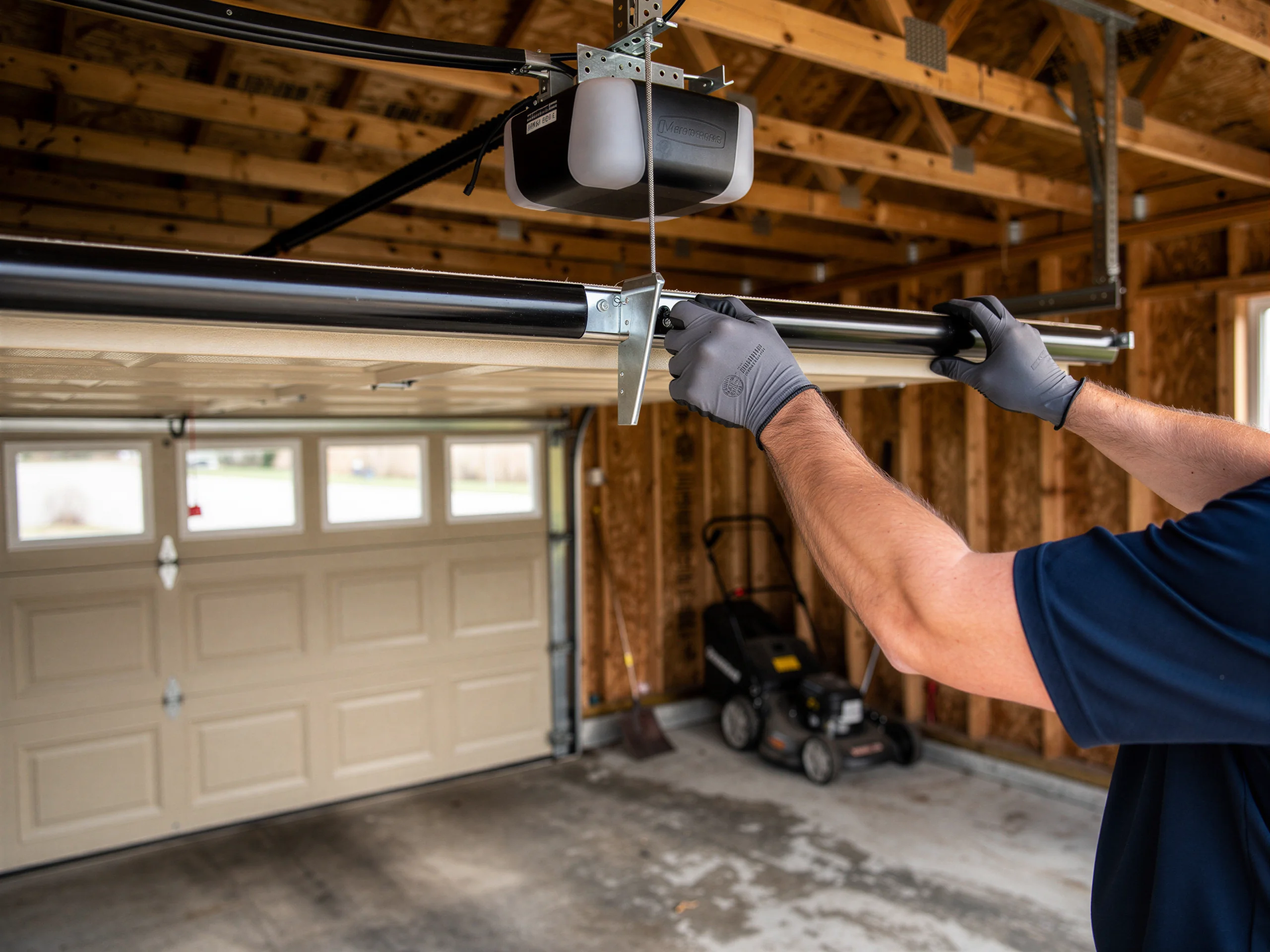
Some of this is fair to tackle on your own. Tightening loose hinge bolts, lubricating rollers and hinges with a garage-door-rated silicone spray, clearing track debris, and replacing weatherstripping along the bottom panel are all reasonable weekend jobs with basic tools.
Checking that the photo-eye sensors near the floor are aligned and clean is also something any owner can do before calling anyone out. Torsion springs are where we draw the line, and we'll say it plainly: don't touch them.
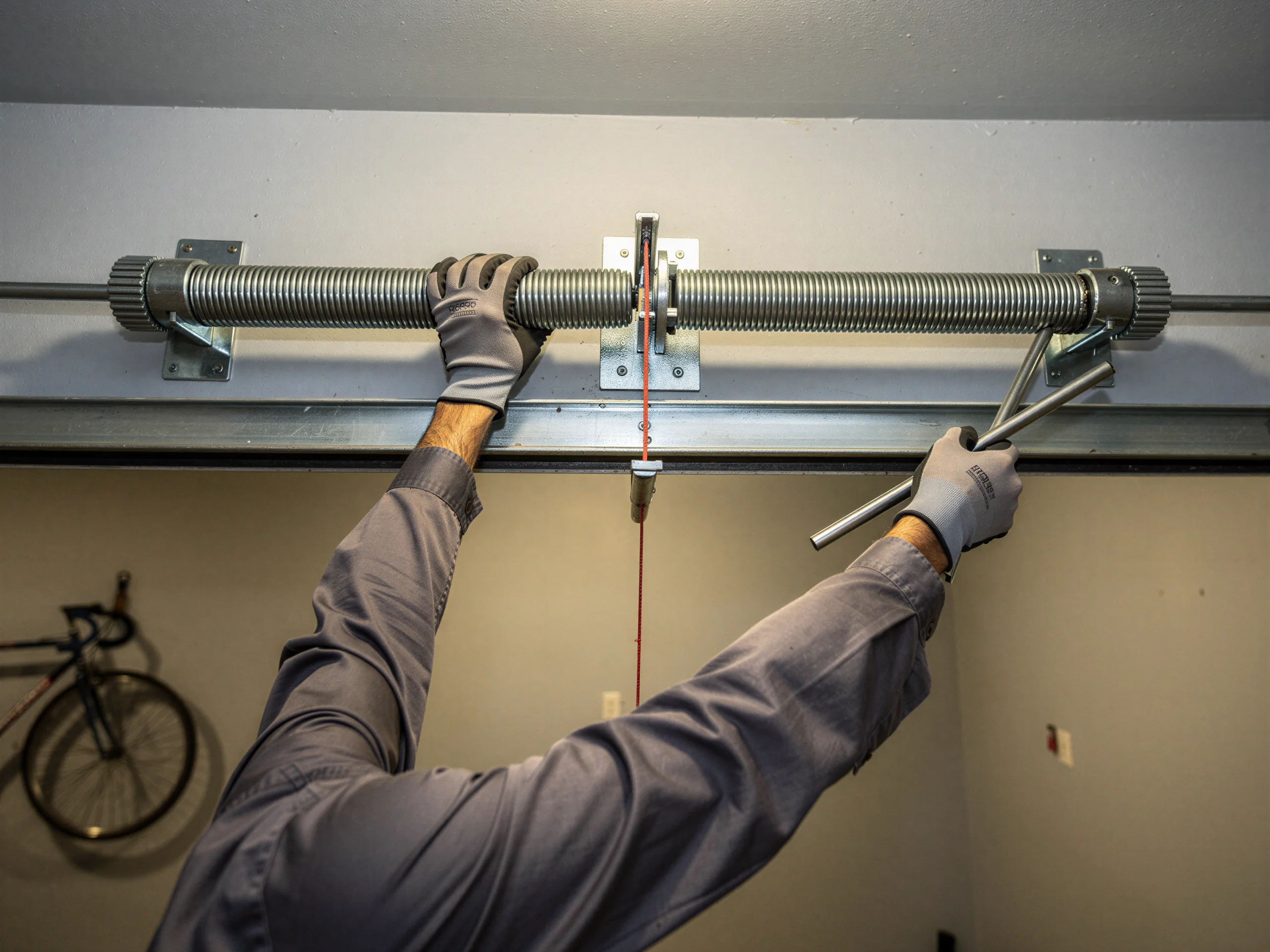
They're wound under enough tension to cause a serious injury if the winding cone slips, and the tools to do it safely aren't something most garages have lying around.
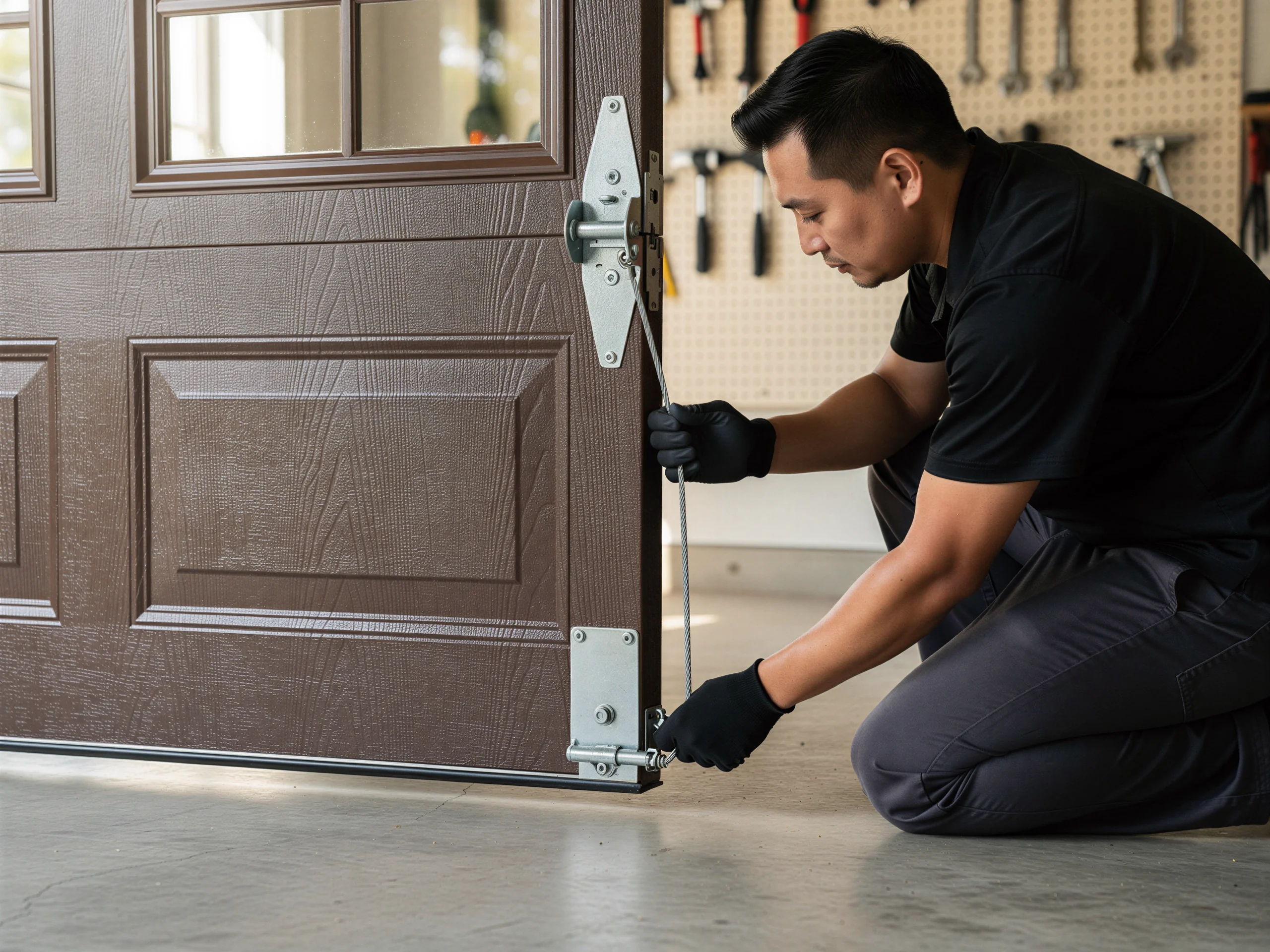
Same goes for cable replacement on a torsion system - the spring has to be unloaded first, and that's the same risk. If your door has two springs and one has broken, the other one is usually close behind on cycle life, and that's a call-us job, not a YouTube-video job.
Warning signs
On older doors in this area, the first sign is usually the opener straining - it takes longer to lift, or it reverses partway up for no clear reason.
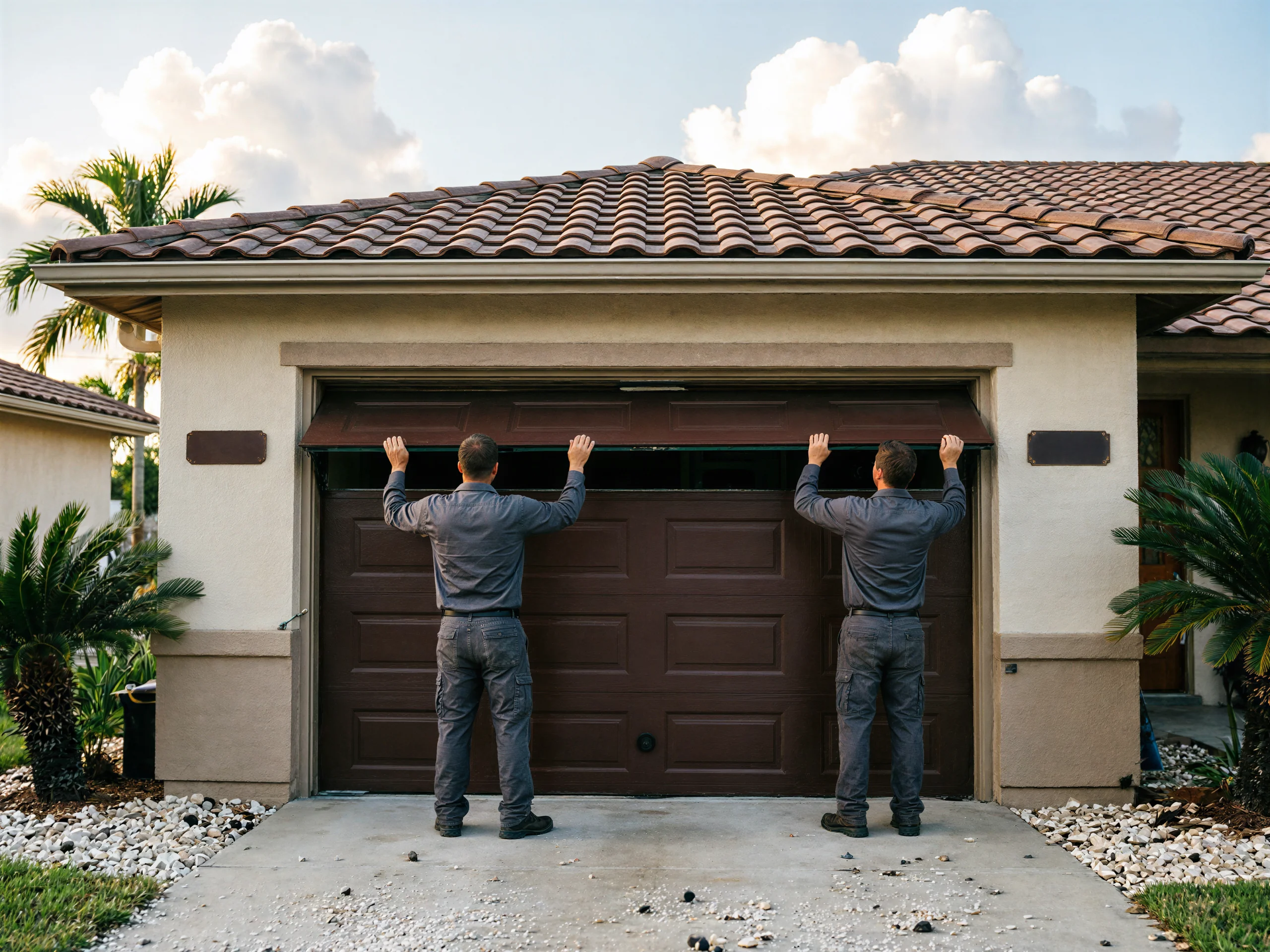
That's often a spring that's lost tension doing a job it used to do easily. A loud bang from the garage, followed by the door refusing to move at all, is a torsion spring that's let go outright - common enough on doors original to houses from the 1970s stock that haven't had the spring swapped since the house was built.
A door that drifts to one side as it travels, or that looks like it's racking in the opening, usually points to a bent track or a cable that's slipped off the drum rather than the spring.
Rollers that grind or squeal but still move are a lubrication issue, not yet a parts issue - catch that one before it wears the track. If the door won't respond to the remote or wall button at all, check the breaker before assuming it's mechanical; that's the cheapest possible fix and it's worth ruling out first.
Questions
Most torsion springs are rated for somewhere around 10,000 cycles, which works out to roughly seven to ten years of normal use - two trips a day. A door original to a house built in the 1970s or early 80s, which describes a good share of homes in this area, is almost certainly past that number even if it hasn't broken yet.
Heat makes grease and lubricant thin out and run, which leaves rollers and hinges drier than they were in cooler months. Combined with humidity working into unlubricated metal over time, that extra friction shows up as a slower, louder lift. A lubrication pass usually solves it if the spring itself is still in good shape.
We'd tell you not to. Torsion springs are wound under heavy tension, and the winding bars and clamps needed to do it safely aren't standard household tools. It's also common for the second spring on a two-spring system to fail shortly after the first, so it's worth having both checked at once rather than doing it twice.
Explore more
Ready when you are
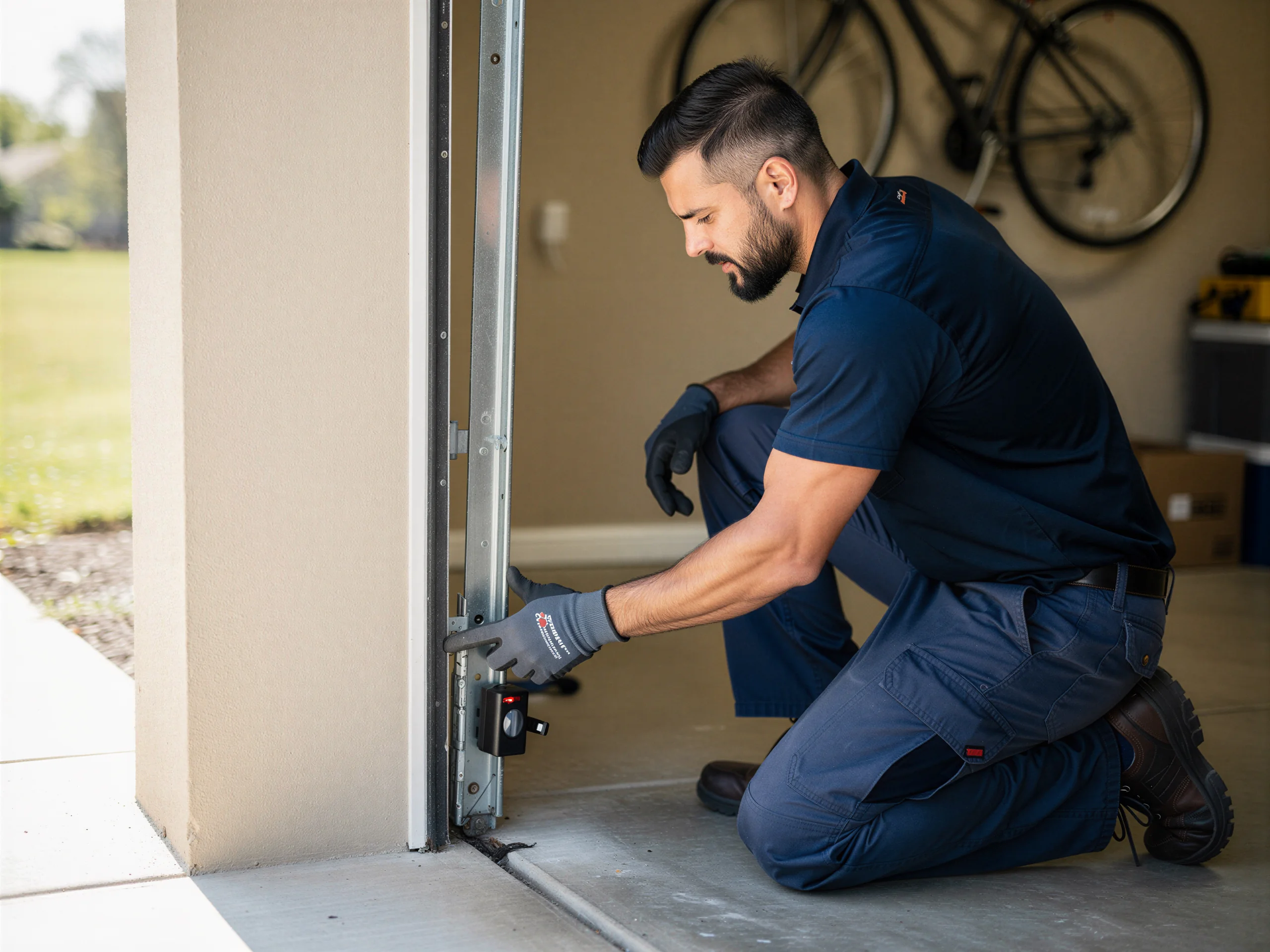
Destin Garage Door Pros repairs and installs garage doors, springs and openers in Destin, FL and the surrounding area.