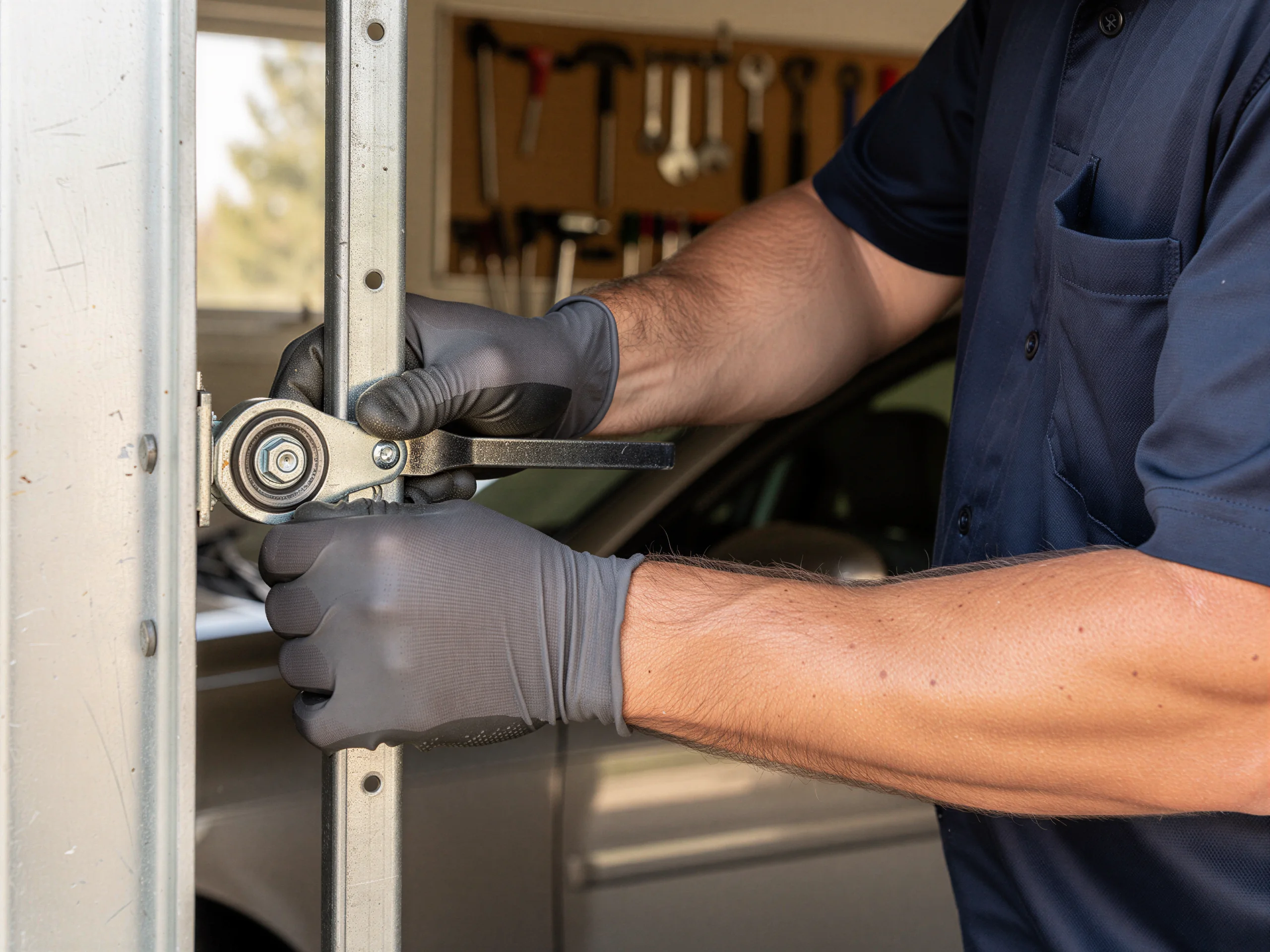
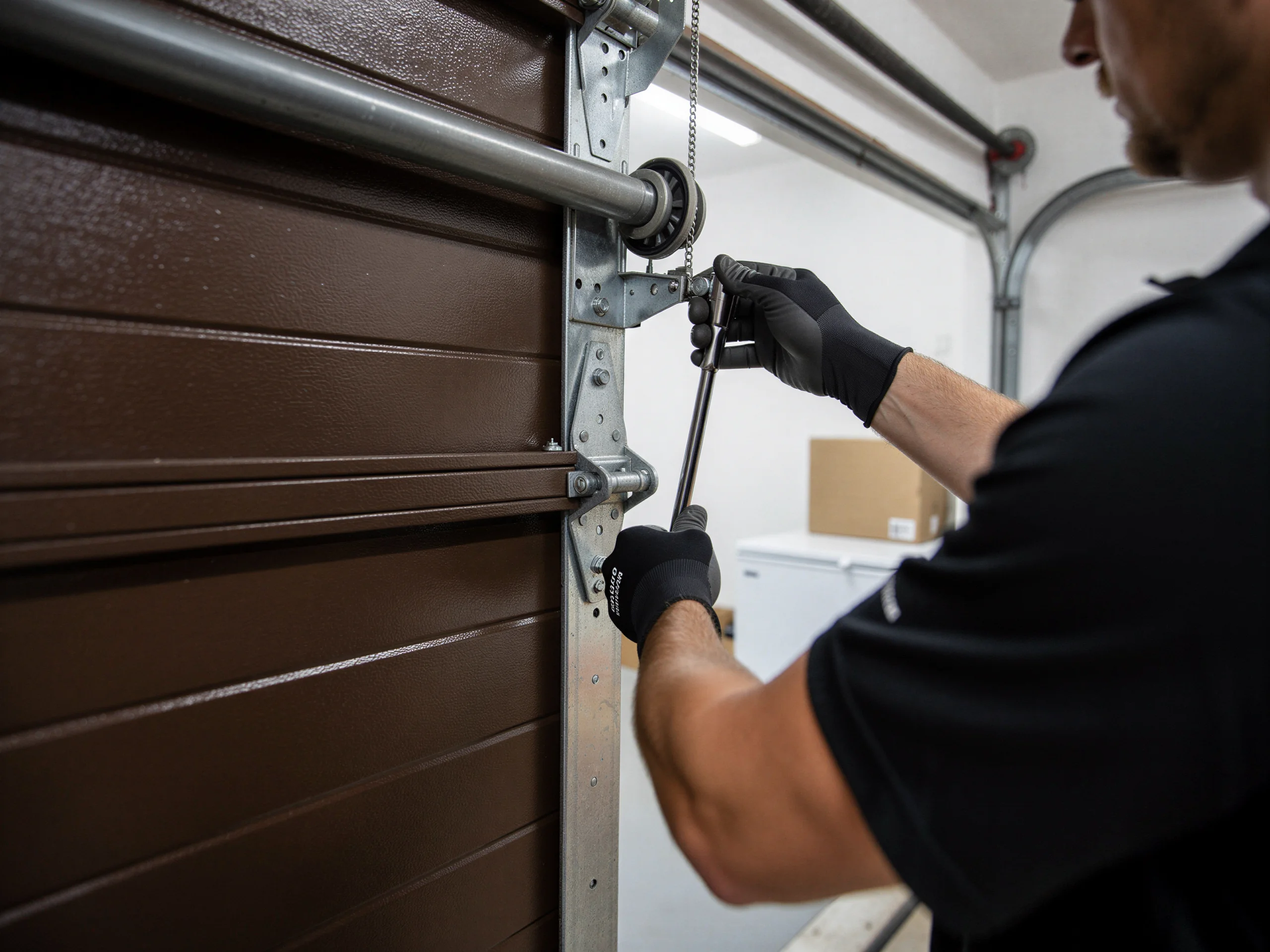
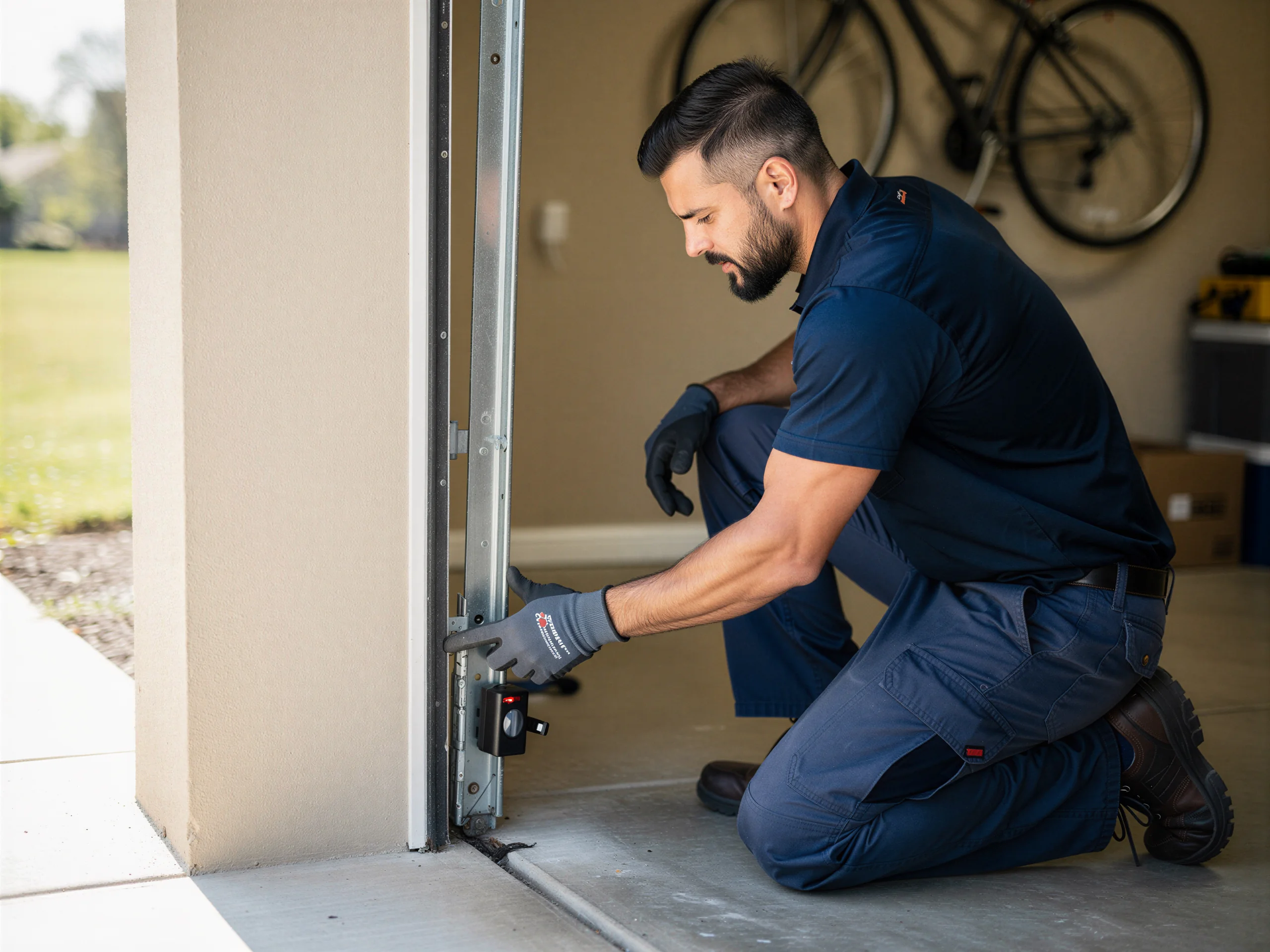
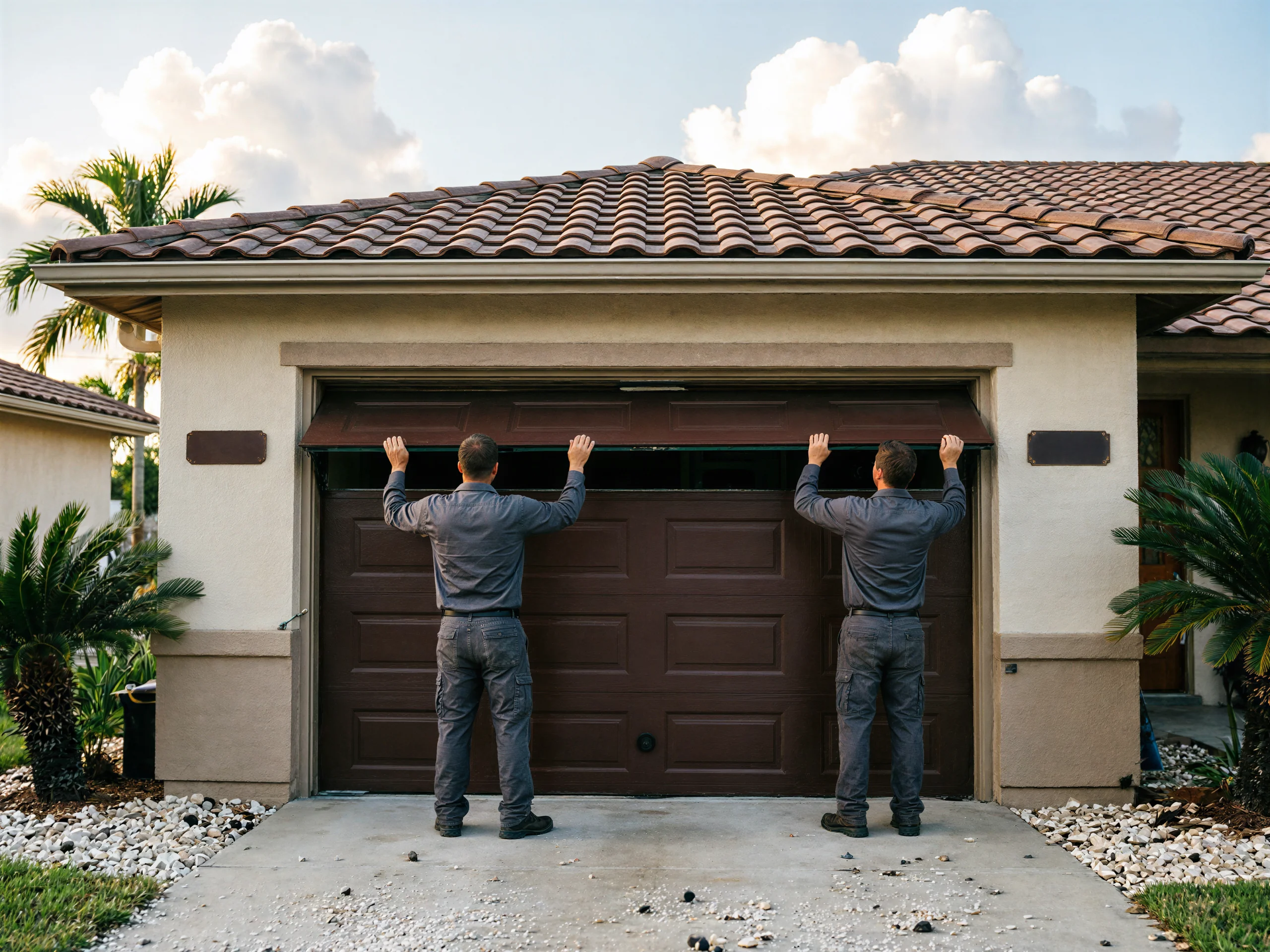
The most common version: the door moves fine going down, then catches and leans on the way up, with a visible gap where a roller has walked out of the channel. Sometimes you hear it before you see it - a scrape or a thunk right as the door passes the point where the track curves from vertical to horizontal, which is where brackets take the most stress.
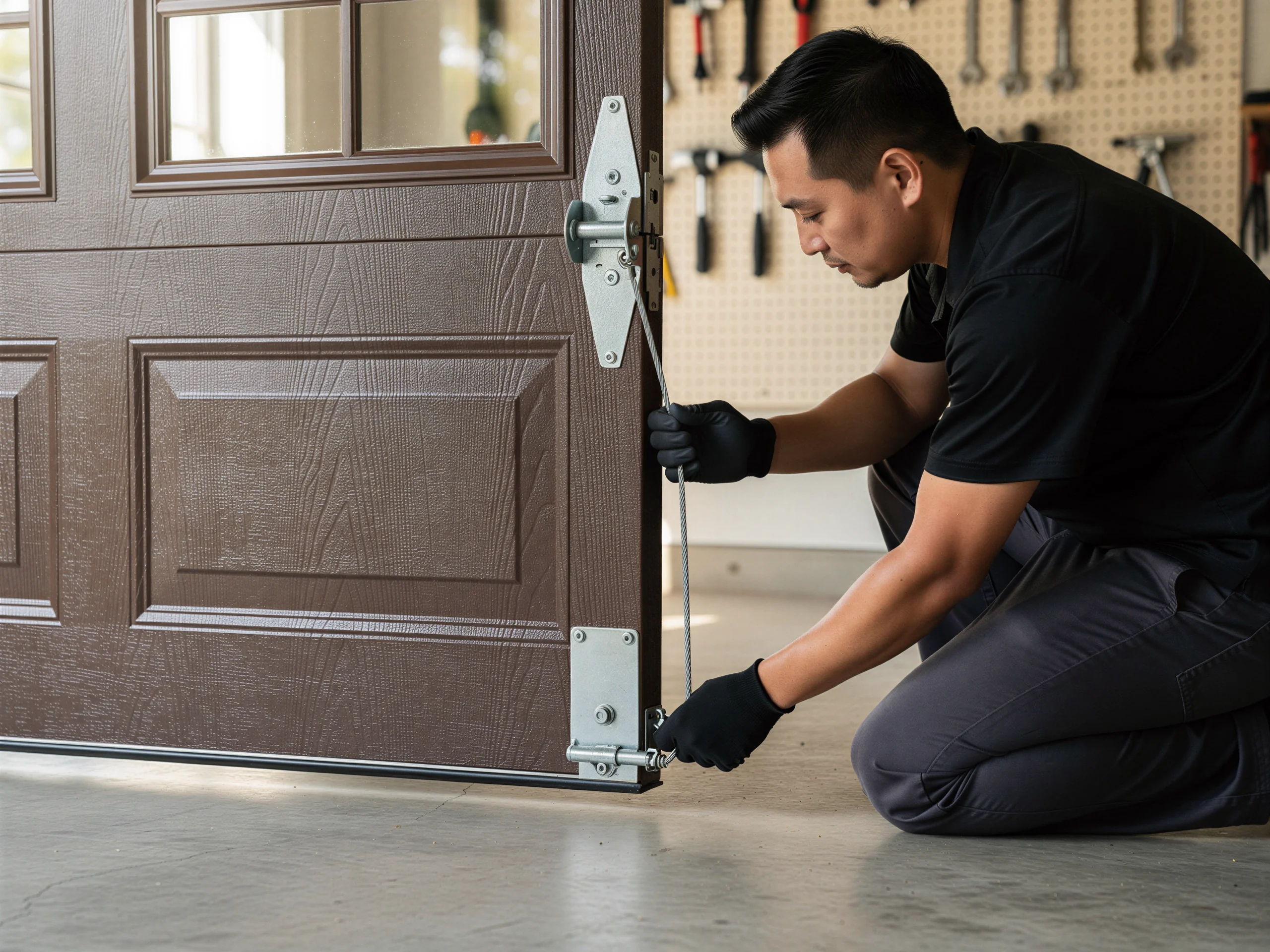
A second pattern shows up after storms blow through and push debris or standing water near the base of the door. It doesn't bend the track by itself, but it can rust a bottom bracket that was already marginal from age, and that's often the piece that finally lets go. The region's climate runs mild with only occasional freeze conditions, so the usual culprit isn't ice jamming the track the way it might further north - it's slow corrosion plus original 1990s-grade hardware that was never built to be serviced.
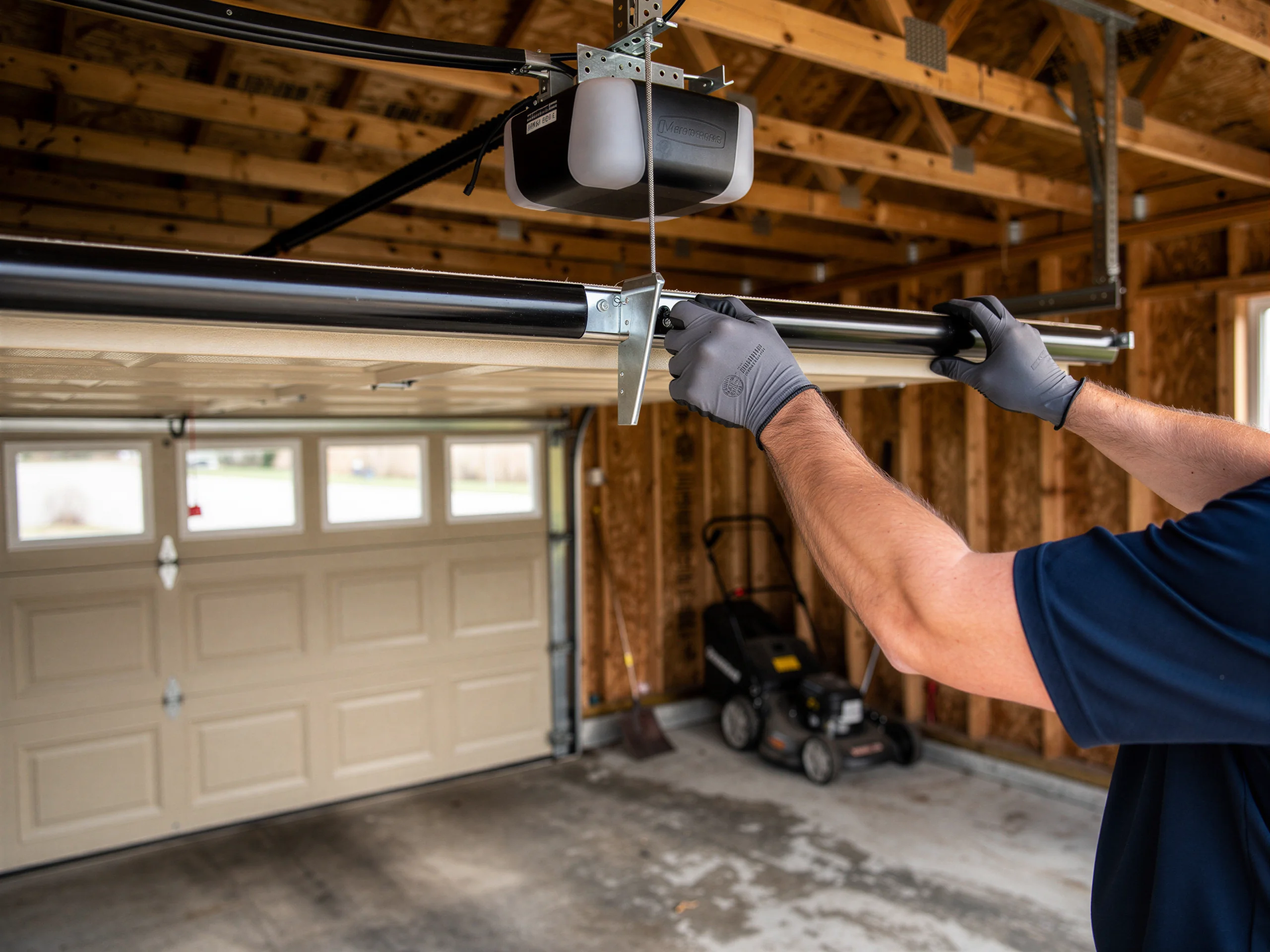
If the opener strains, reverses partway up, or you hear a grinding sound that wasn't there last month, don't keep running it. Running a door on a bent rail wears the opener's gears and can crack a panel at the hinge, turning a track repair into a door replacement.